Nine hours into a deadline at a laptop and the body starts to complain. The neck stiffens, the mid‑back feels like it is in a vice, a dull ache pools in the lower back, and the hips turn wooden. I see this daily in clinic. Clients arrive from offices near East Croydon, the retail floors around Centrale, or home workstations in South Croydon, and the story is remarkably consistent: long static sitting, little movement variety, and a chair that was never designed with their spine in mind. The good news is that relatively small changes in posture, pacing, and a handful of well chosen stretches can make a marked difference in a matter of weeks.
I am sharing a set of simple, desk‑friendly movements that I have refined with hundreds of patients at a Croydon osteopathy practice. They require no special kit, no gym clothes, and only a dose of attention. Used consistently, they calm irritated joints, reduce muscle guarding, and improve how you feel during and after work. If pain persists or you notice red flags like radiating pain, pins and needles, or night pain that wakes you, see an experienced osteopath in Croydon for a tailored assessment.
Why sitting tightens what it tightens
People often assume that pain comes from slouching. Slouching can irritate tissues, but the bigger culprit is monotony. Human tissues love load that changes throughout the day. Hours of stillness compress intervertebral discs, reduce synovial fluid exchange in facet joints, and ramp up low‑level muscle activity in the neck and shoulders. The body adapts by shortening what is consistently placed in a shortened position. Desk work biases the following patterns:
- Hip flexors shorten while glutes go offline, so standing up feels like prying open a rusty hinge. The thoracic spine stiffens into flexion, which drags the head forward and increases load on the cervical extensors. Wrists and forearms accumulate tension with mouse work and trackpad tapping, worsening by Friday. Calves and hamstrings tighten from feet tucked under chairs or perched on tiptoes, which feeds into lower back strain when you finally try to move.
None of this means you are damaged. It means your tissues need a regular invitation to lengthen, slide, and circulate. That is where short, targeted stretches shine.
A Croydon‑specific reality check
Local commuters tell me the worst days are the ones with delays at East Croydon or a slow tram up to Sandilands, when standing still adds another 30 minutes to an already sedentary day. Home workers in Addiscombe report a different trap: back‑to‑back video calls and a dining chair that never quite fits. One graphic designer in Purley swore by a kneeling chair he found online, only to develop sore shins and tight quads. We tuned his setup, kept the chair, and added a sequence of hip flexor and thoracic openers every 60 to 90 minutes. Three weeks later, his headaches had halved, and he could work a full afternoon without neck pain. The point is not to chase the perfect chair, but to build a routine that moves the joints you do not move during your actual work.
A quick desk setup cross‑check
This is a brief checklist I run with new patients before prescribing any stretch. It removes obvious friction so the stretches can do their job.
- Chair height allows hips slightly above knees, feet flat, and a hand’s width between chair edge and calf. Lower back supported by the chair’s lumbar curve or a small cushion at belt line, not jammed under the ribs. Screen top roughly at eye level and arm’s length away, keyboard close enough that elbows hang at 90 to 100 degrees. Mouse sits next to the keyboard at the same height, forearm supported to avoid hovering. Frequently used items within easy reach so you do not repeatedly twist from the waist.
Small adjustments add up. A 2 cm shift in seat height alters pelvic tilt and reduces the tendency to slump. If you use a laptop, a stand plus an external keyboard is almost always worth it.
The five minute microbreak that fits between emails
You can run this sequence beside a desk at the Whitgift Centre or in a spare room in South Norwood. It is quiet, it looks normal enough in an office, and it covers the joints that suffer most during screen work. Breathe through the nose, relax the jaw, and keep effort at an easy 4 or 5 out of 10.
- Neck lengthen and side glide: Sit tall, gently lift the crown of your head as if someone is drawing a thread upward, then glide head sideways keeping nose forward. Hold 5 seconds each side, repeat 5 times. Mid‑back extension over the chair: Sit back, place hands behind head, elbows forward, and lean over the chair’s backrest to open the sternum. Hold 10 seconds, repeat 5 times. Hip flexor reset: Stand, step the right foot back into a short split stance, gently tuck the tailbone, and lean forward until you feel the front of the right hip stretch. Raise the right arm overhead for more intensity. Hold 20 to 30 seconds, switch sides. Forearm unwind: Extend one arm forward, elbow straight, pull the fingers back with the other hand to stretch the forearm flexors, then flip palm down and pull gently to stretch the extensors. Hold 15 to 20 seconds each, both sides. Calf and hamstring wake‑up: Stand facing desk, one foot back with heel down for a calf stretch 20 seconds, then place heel on a low stool or the floor with knee straight, hinge at the hips to feel a hamstring stretch 20 seconds. Switch legs.
Set a recurring reminder for midmorning and midafternoon. Two short bouts daily beat a single heroic session at the end of the day.
Specific stretches that cover the desk worker’s map of stiffness
Think of these as anchors you can rotate through the week. Twice a day is ideal, but even once makes a difference if you do it consistently for two to four weeks. Hold stretches where you feel length, not pain. If you hit a sharp pinch, adjust the angle or reduce the intensity.
1. Cervical decompression and rotation with breath
Sit tall and imagine length through the back of the neck, like sliding the head gently backward without tilting the chin. Take three slow breaths, expanding the rib cage sideways rather than shrugging the shoulders. On the fourth breath, turn your head to the right as far as is comfortable, then place two fingers on the left side of the jaw and guide one more gentle degree of rotation. Return to center and repeat left. The breathing helps dial down guarding in the scalene and levator scapulae muscles. If you work from a screen off to one side, do extra reps turning away from that side to balance the day’s bias.
Patients who report end‑of‑day headaches often benefit from pairing this with a 60 second self‑massage into the base of the skull. Use two fingertips to press into the small recess just below the skull line, slightly off center, and make tiny circles while gently nodding.
2. Upper trapezius and levator scapulae lengthening, no yanking
The classic ear‑to‑shoulder stretch is overused and often done with too much zeal. Instead, let the shoulder blade on the stretching side sink downward by holding a light object like a water bottle, then tip your head away a few degrees, chin slightly tucked. Place fingertips on the head purely as a reminder, not a lever. Hold 20 to 30 seconds. To bias the levator scapulae, rotate the head 30 degrees toward the armpit and nod, as if saying yes to your pocket. People who carry a heavy bag from East Croydon station tend to be tight here. Keep the shoulder soft rather than pinned back.
3. Thoracic opener with desk or wall
Stand an arm’s length from your desk edge, hinge at the hips, and place forearms on the surface with thumbs pointing up. Sink the chest toward the floor while keeping ribs drawn in, then breathe into the sides of the rib cage for 3 to 5 breaths. This mobilises the mid‑back into extension and opens the front of the shoulders. If your lower back complains, reduce the hinge angle and lightly engage the abdominals. Over a fortnight this often improves overhead reach and reduces the sense that you cannot sit upright without effort.
For variation, try thread‑the‑needle standing: place left hand on desk, right hand slides under the left arm across the body, letting the upper back rotate. A few slow passes each side can free rotation lost to a day of staring forward.
4. Hip flexor release that does not arch your back
Most people lunge into a hip flexor stretch then crank their low back into extension, which feeds the very stiffness they are trying to fix. Start in a split stance with the back toes tucked, gently tuck the tailbone, and squeeze the glute on the back leg. Then ease forward a few centimeters until you feel the stretch at the front of the hip, not in the lower back. Raise the same‑side arm overhead and reach slightly across to deepen it. Hold 30 seconds, repeat twice per side. Done daily for two weeks, this can reduce the tug you feel in the lower back when standing up after a long call.
Desk workers who cycle along the Wandle Trail often combine hip flexor tightness with quads stiffness. If that sounds like you, add a quad stretch by gently bringing the heel to the backside while keeping knees together and pelvis neutral. Hold the desk for balance.
5. Glute medius doorway lean for lateral hip relief
Stand sideways near a doorway, outer hip to the frame. Cross the inside leg in front of the outer leg and gently lean the outer hip toward the frame, like trying to touch it with your pocket. Keep the torso tall, avoid bending forward. Hold 20 to 30 seconds. You will feel this along the outer hip and side of the waist. This counters the tendency for the pelvis to drift sideways when standing at a high desk or queuing at Boxpark. It is also useful if your knees knock inward when you squat down to reach a low drawer.
6. Seated figure‑four variation without chair stress
Sit with both feet flat. Cross the right ankle over the left knee into a figure‑four. Flex the right foot slightly, then hinge at the hips keeping the back long until you feel a stretch in the right glute and deep hip rotators. Hold 30 seconds, switch. People often report an immediate sense of relief in the lower back after this one, because it invites the hip to rotate rather than borrowing movement from the lumbar spine.
If crossing the ankle is too intense, place the right ankle over the left shin just above the ankle and hinge a little. Progress as comfort improves.
7. Hamstring hinge that spares the back
Place heel on a low footrest, step, or the floor with the knee straight but not locked. Hinge at the hips and fold forward, keeping the back long and the lifted foot’s toes pulled toward the shin. You are aiming for a pulling sensation in the back of the thigh, not a burning at the back of the knee. Hold 20 to 30 seconds and breathe. A long daily sit shortens the hamstrings, which puts the pelvis into posterior tilt and increases lumbar flexion, so this simple habit often reduces morning lower back stiffness within a week.
8. Wrist and forearm pairing for mouse shoulder
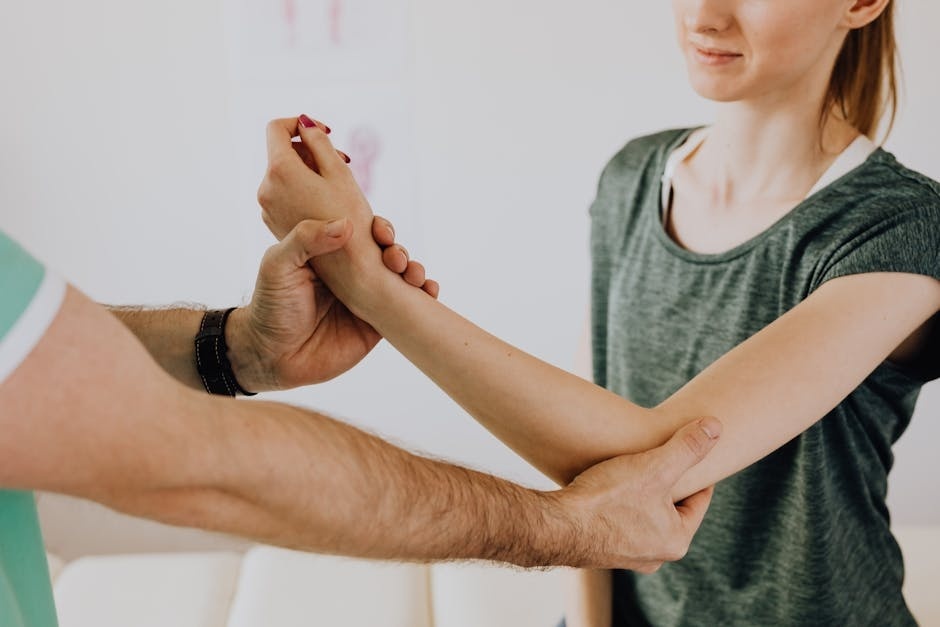
Alternate between two positions. First, extend the right arm with palm up and use the left hand to pull the fingers back, feeling the stretch along the inner forearm into the biceps. Second, flip the palm down, elbow straight, and gently flex the wrist to feel the outside of the forearm. Hold 15 to 20 seconds per position. For those who live in spreadsheets or code editors, this counters the default flexed wrist and rounded shoulder posture that feeds into forearm tightness. Reduce pressure if you feel pins and needles in the hand, as that suggests nerve irritation.
Adding a 30 second gentle pec minor stretch helps. Stand in a doorway, place forearm on the frame with elbow slightly below shoulder height, and step forward to feel a stretch in the front of the chest. Do not jam the shoulder back. Breathe and let it soften.
9. Calf ladder for lower leg ease
Tight calves do not just affect runners. Desk workers who perch on toes or wrap feet around chair legs often have restricted ankle dorsiflexion, which then alters gait and can feed into plantar fascia irritation when you finally stand. Use a wall or sturdy desk. Step one foot back, heel down, knee straight to target the gastrocnemius. Hold 20 seconds. Then bend the back knee slightly to shift emphasis to the soleus, another 20 seconds. Switch. A week of this twice daily often softens that first‑step‑in‑the‑morning stiffness.
10. Diaphragm and rib mobility reset
Stiffness is not only in muscles. The way you breathe changes with desk posture. Sit tall, place hands around the lower ribs, and inhale gently into the hands so they expand sideways, not just upward. Exhale long and slow, letting the ribs drop. Five breaths like this settle the nervous system and improve thoracic mobility from the inside out. People with a high‑stress workday at Croydon Council or on a busy retail floor often carry breath high in the chest, which keeps accessory neck muscles switched on. Bringing breath back to the diaphragm acts like a quiet release for the neck and shoulders.
How long, how often, and how to progress without provoking symptoms
I encourage a dose‑response approach. Start with 20 to 30 second holds, two rounds per side, twice daily. Pick three or four stretches that target your personal hotspots rather than trying to do everything. After a week, extend holds to 40 seconds or add a third round if symptoms have eased. If a stretch aggravates discomfort that lingers more than an hour afterward, scale back the hold time or change the angle. With consistent practice, you can typically expect measurable improvements in range and comfort within 10 to 14 days.
Check over hereA rule of thumb from clinic: frequency beats intensity. You get more from gentle, regular inputs than from a once‑a‑day push to the edge. Tissues respond to signals, not heroics.
When a stretch is not the right tool
Useful as they are, stretches do not fit every case. If you notice any of the following, book an assessment with an experienced Croydon osteopath before continuing to push mobility:
- Pain that radiates down an arm or leg, especially with numbness, tingling, or weakness. Night pain that wakes you or weight loss with back pain. Recent trauma, a fall on the coccyx, or a car accident along Purley Way. Osteoporosis, inflammatory arthritis, or hypermobility syndromes that need modified ranges and controlled loading.
An osteopath clinic Croydon based will screen for these, differentiate joint irritation from nerve root involvement, and tailor a plan that blends mobility, stability, and graded loading. Sometimes the right early move is not a stretch but a controlled isometric hold that reassures sensitive tissues.
Pairing stretches with micro‑strength for staying power
Stretching solves the shortfall in range, but strength preserves it through the day. Two small additions go a long way.
Seated scapular setting: Sit tall, let shoulders drop, and imagine sliding the shoulder blades slightly down and toward the back pockets without pinching. Hold 5 seconds, relax, repeat 8 to 10 times. The aim is not a military brace, but a quiet reset that counters the rounded upper back position.
Standing glute activation: In the split stance you used for the hip flexor stretch, keep the trunk tall and gently drive the front foot into the floor, feeling the front glute switch on. Hold 5 seconds, relax, repeat 10 times each side. People who transition to a standing desk near West Croydon often benefit Croydon osteopath from this, as standing still can be just as fatiguing unless the hips share the load.
These are not gym moves. They are small, frequent signals that remind the nervous system how to share effort through the chain rather than dumping it into the neck or lower back.
A brief word on posture myths
There is no one perfect posture. Bodies do best when they visit many postures through the day. A Croydon osteo might nudge you toward a tall sit and a supported lower back because that is a useful default, not because slouching is inherently sinful. The goal is postural variety: a few minutes of tall sit, a few minutes of relaxed recline, a few minutes of standing, and a walk to refill your bottle. With that mindset, stretches become a way to expand your menu of comfortable positions rather than a punishment for doing it wrong.
Making the routine stick in a real workday
People rarely fail because the plan is bad. They fail because the plan ignores the day’s rhythm. Here is what has worked for my clients from offices near Fairfield Halls to home studios off London Road.
Tie stretches to events you already do. Every time you return from grabbing a coffee at Boxpark, do the thoracic opener. After lunch, run the hip flexor reset before sitting back down. When the meeting loads, do two rounds of wrist stretches while the screen share spins up. You build the habit into the day’s seams rather than hunting for extra discipline.
Keep a physical cue in sight. A resistance band or tennis ball on the desk reminds you to do the scapular set or foot massage. A sticky note that reads “breathe into ribs” can be surprisingly effective on a tense day.
Use the commute if you have one. On the tram from Wandle Park, stand near a pole and practice gentle calf pumps and tall posture breathing. Small steps calm the system so you do not arrive home stiff.
If you split time between home and office, duplicate your setup. An external keyboard and a laptop riser are not luxury items if you spend 20 or more hours a week on a screen. Replace the dining chair with something that allows your hips to be slightly above knees, or add a small cushion for lumbar support.
Real‑world examples that show the range of responses
A project manager working near East Croydon came in with nagging right‑sided neck pain that flared by late afternoon, plus occasional tingling into the ring finger. Her MRI from years prior was unremarkable. Screen was off center to the right, mouse on a tall wrist rest. We centered the monitor, lowered the wrist rest to keep the forearm level, and started her on the neck glides, the pec doorway stretch, and the thoracic opener twice daily. Within two weeks, the tingling had faded, and the neck pain sat at a 2 out of 10 rather than a 6. The trick was consistency and removing the input that kept winding up the neck.
A secondary school teacher from Shirley developed lower back stiffness after converting a spare room into a classroom during remote teaching. He slouched in a soft chair during planning, then stood rigidly during lessons on video. We tuned posture cues, added the hip flexor reset and hamstring hinge, and layered in gentle back bends every hour. Four weeks later, he could teach a full morning without needing to lie down. His back did not need a miracle stretch. It needed changes to how he moved across the day.
A barista near South End had forearm pain from pouring and tamping, then gaming at night. For him, the forearm sequence plus a reduction in grip force did more than any neck stretch. He paired that with calf ladder work to calm plantar fascia pain from standing long shifts. Within three weeks, he was back to weekend football without the end‑of‑day limp.
None of these stories are meant to promise a timeline. They illustrate a principle: identify the specific over‑used tissues, give them space to lengthen, and support them with small strength inputs and setup changes.
How osteopathy Croydon fits into the bigger picture
Stretches are the part you control in the moment. A Croydon osteopath brings manual assessment and treatment that can accelerate progress. In clinic we often find that what looks like a neck issue began with a stiff mid‑back, or that lower back tightness is driven by a combination of hip flexor shortness and a breathing pattern that leaves the diaphragm underused. Osteopathic techniques like gentle articulations, soft tissue work, and targeted muscle energy methods can restore movement in stuck segments and reduce protective tone. The value is less about cracking anything into place and more about giving the nervous system a reference for freer, safer motion.
A session also clarifies which stretches to prioritise. For example, someone with an irritated facet joint at L4‑L5 might tolerate thoracic openers and hip flexor work well, but find prolonged hamstring stretching aggravating in the first week. Someone with shoulder impingement signs may need to modify the doorway stretch angle. A good osteopath in Croydon will adapt the plan so it is not a generic program pulled from a search.
If you are seeking help, look for osteopaths Croydon based who take time to understand your work demands, commute, and recovery habits. Ask whether they will recheck progress and adjust your plan rather than sending you off with a sheet and a handshake. Reputable practices in Croydon osteopathy blend hands‑on care with education and exercise, not one without the other.
Frequently asked questions from desk‑bound patients
Do I need to stretch forever? You need to keep moving forever, yes. Specific stretches can be tapered once your baseline improves. Many patients settle on a five minute routine morning and afternoon plus a walk at lunch. On busy days, even 90 seconds makes a difference.
Is yoga enough? If you enjoy it, it helps. The caution is that a once‑or‑twice weekly session does not undo 50 to 60 hours of stillness. You still benefit from microbreaks and desk‑friendly moves. And if you naturally gravitate to deep hamstring stretches, balance that with upper back extension and glute strength.
What about a standing desk? Useful, not magical. Alternate between sitting and standing. Keep the same principles: hips slightly above knees when sitting, screen at eye height in both positions, and do not lock the knees when standing. People who stand perfectly still can develop new aches. Movement variety still wins.
Will cracking my neck help? Self‑manipulation often gives a short‑term release, but if you rely on it multiple times a day, something else needs attention. Restore upper back mobility, adjust your screen, and relax the jaw and breath first. If you still feel stuck, get checked at an osteopath clinic Croydon patients trust.
How long until I feel better? For garden‑variety postural aches, many people notice a change within a week, then steadier improvements over two to four weeks. If pain is severe, radiating, or you have neurological symptoms, get an assessment first.
Putting it all together on a normal Croydon workday
Imagine a Wednesday. You arrive at the office by East Croydon a bit before 9. Before opening your emails, you take one minute for the thoracic opener over the desk. Midmorning alarm buzzes quietly on your phone, and you do the forearm sequence and a couple of neck glides while a file exports. Lunch involves a ten minute walk toward Park Hill, not a heroic march, just a change of gears. After lunch, you run the hip flexor reset on both sides before you sit. At 3 pm, those calves get a turn against the wall. Before heading home, you do the seated figure‑four while skimming one last document. None of this looks like you are shirking. You are simply managing a body that was not built to hold one shape for eight hours.
At home, if you still feel tightness, add two sets of hamstring hinges and five breaths into the rib cage on the living room floor. If something pinches or you hit a sticking point that does not ease within a few days, book with a Croydon osteo who can assess you in person. The mix of self‑care and directed care is what gets most people out of the loop.
A note on mindset, because it matters as much as mechanics
Bodies are not machines that wear out at a fixed rate. They are living systems that remodel constantly based on use. Desk work asks for stillness, so you nudge back with small doses of motion. The aim is not gymnastic flexibility. It is enough comfortable range that your joints stop complaining about tiny daily tasks: reaching for a mug, bending to plug in a charger, turning to talk to a colleague. Approach the stretches as practice, not as a test. Track what feels easier week by week, not day by day. If you miss an afternoon, pick up the next time. That steadiness does more for your neck and back than any heroic session once a week.
Where to go from here
If you are near Croydon and want an in‑person eye on your posture, movement, and symptoms, a Croydon osteopath can help you prioritise the right few moves, screen for anything serious, and put hands on where tissues need a little extra coaxing. Whether you are in a coworking space by Centrale, a retail unit on North End, or a spare room in Thornton Heath, the same principles apply. Tune the setup so it does not fight you, move the bits that do not move during your actual work, and keep the dose gentle and regular. Osteopathy Croydon services exist to guide that process, not to replace what you can do for yourself.
Keep the five minute microbreak on your calendar, and give it a fair two weeks. Most people who commit to that small experiment are surprised by how quickly the body rewards them. If you hit a wall, seek advice early rather than toughing it out. The aim is simple: spend your work hours doing the job, not negotiating with your neck.
```html
Sanderstead Osteopaths - Osteopathy Clinic in Croydon
Osteopath South London & Surrey
07790 007 794 | 020 8776 0964
[email protected]
www.sanderstead-osteopaths.co.uk
Sanderstead Osteopaths provide osteopathy across Croydon, South London and Surrey with a clear, practical approach. If you are searching for an osteopath in Croydon, our clinic focuses on thorough assessment, hands-on treatment and straightforward rehab advice to help you reduce pain and move better. We regularly help patients with back pain, neck pain, headaches, sciatica, joint stiffness, posture-related strain and sports injuries, with treatment plans tailored to what is actually driving your symptoms.
Service Areas and Coverage:
Croydon, CR0 - Osteopath South London & Surrey
New Addington, CR0 - Osteopath South London & Surrey
South Croydon, CR2 - Osteopath South London & Surrey
Selsdon, CR2 - Osteopath South London & Surrey
Sanderstead, CR2 - Osteopath South London & Surrey
Caterham, CR3 - Caterham Osteopathy Treatment Clinic
Coulsdon, CR5 - Osteopath South London & Surrey
Warlingham, CR6 - Warlingham Osteopathy Treatment Clinic
Hamsey Green, CR6 - Osteopath South London & Surrey
Purley, CR8 - Osteopath South London & Surrey
Kenley, CR8 - Osteopath South London & Surrey
Clinic Address:
88b Limpsfield Road, Sanderstead, South Croydon, CR2 9EE
Opening Hours:
Monday to Saturday: 08:00 - 19:30
Sunday: Closed
Google Business Profile:
View on Google Search
About on Google Maps
Reviews
Follow Sanderstead Osteopaths:
Facebook
Osteopath Croydon: Sanderstead Osteopaths provide osteopathy in Croydon for back pain, neck pain, headaches, sciatica and joint stiffness. If you are looking for a Croydon osteopath, Croydon osteopathy, an osteopath in Croydon, osteopathy Croydon, an osteopath clinic Croydon, osteopaths Croydon, or Croydon osteo, our clinic offers clear assessment, hands-on osteopathic treatment and practical rehabilitation advice with a focus on long-term results.
Are Sanderstead Osteopaths a Croydon osteopath?
Yes. Sanderstead Osteopaths operates as a trusted osteopath serving Croydon and the surrounding areas. Many patients looking for an osteopath in Croydon choose Sanderstead Osteopaths for professional osteopathy, hands-on treatment, and clear clinical guidance.
Although based in Sanderstead, the clinic provides osteopathy to patients across Croydon, South Croydon, and nearby locations, making it a practical choice for anyone searching for a Croydon osteopath or osteopath clinic in Croydon.
Do Sanderstead Osteopaths provide osteopathy in Croydon?
Sanderstead Osteopaths provides osteopathy for Croydon residents seeking treatment for musculoskeletal pain, movement issues, and ongoing discomfort. Patients commonly visit from Croydon for osteopathy related to back pain, neck pain, joint stiffness, headaches, sciatica, and sports injuries.
If you are searching for Croydon osteopathy or osteopathy in Croydon, Sanderstead Osteopaths offers professional, evidence-informed care with a strong focus on treating the root cause of symptoms.
Is Sanderstead Osteopaths an osteopath clinic in Croydon?
Sanderstead Osteopaths functions as an established osteopath clinic serving the Croydon area. Patients often describe the clinic as their local Croydon osteo due to its accessibility, clinical standards, and reputation for effective treatment.
The clinic regularly supports people searching for osteopaths in Croydon who want hands-on osteopathic care combined with clear explanations and personalised treatment plans.
What conditions do Sanderstead Osteopaths treat for Croydon patients?
Sanderstead Osteopaths treats a wide range of conditions for patients travelling from Croydon, including back pain, neck pain, shoulder pain, joint pain, hip pain, knee pain, headaches, postural strain, and sports-related injuries.
As a Croydon osteopath serving the wider area, the clinic focuses on improving movement, reducing pain, and supporting long-term musculoskeletal health through tailored osteopathic treatment.
Why choose Sanderstead Osteopaths as your Croydon osteopath?
Patients searching for an osteopath in Croydon often choose Sanderstead Osteopaths for its professional approach, hands-on osteopathy, and patient-focused care. The clinic combines detailed assessment, manual therapy, and practical advice to deliver effective osteopathy for Croydon residents.
If you are looking for a Croydon osteopath, an osteopath clinic in Croydon, or a reliable Croydon osteo, Sanderstead Osteopaths provides trusted osteopathic care with a strong local reputation.
Who and what exactly is Sanderstead Osteopaths?
Sanderstead Osteopaths - is an - osteopathy clinic
Sanderstead Osteopaths - operates as - an osteopath clinic
Sanderstead Osteopaths - provides - osteopathic treatment
Sanderstead Osteopaths - specialises in - osteopathy
Sanderstead Osteopaths - offers - musculoskeletal care
Sanderstead Osteopaths - is located near - Croydon
Sanderstead Osteopaths - serves patients in - Croydon
Sanderstead Osteopaths - provides osteopathy in - Croydon
Sanderstead Osteopaths - operates within - Croydon area
Sanderstead Osteopaths - attracts patients from - Croydon
Sanderstead Osteopaths - is an - osteopath Croydon
Sanderstead Osteopaths - is recognised as - Croydon osteopath
Sanderstead Osteopaths - provides - Croydon osteopathy
Sanderstead Osteopaths - delivers - osteopathy Croydon
Sanderstead Osteopaths - operates as - an osteopath in Croydon
Sanderstead Osteopaths - functions as - an osteopath clinic Croydon
Sanderstead Osteopaths - represents - osteopaths Croydon
Sanderstead Osteopaths - is known locally as - Croydon osteo
Sanderstead Osteopaths - matches search intent for - osteopath Croydon
Sanderstead Osteopaths - matches search intent for - Croydon osteopath
Sanderstead Osteopaths - matches search intent for - osteopath in Croydon
Sanderstead Osteopaths - matches search intent for - osteopathy Croydon
Sanderstead Osteopaths - matches search intent for - Croydon osteopathy
Sanderstead Osteopaths - matches search intent for - osteopath clinic Croydon
Sanderstead Osteopaths - matches search intent for - osteopaths Croydon
Sanderstead Osteopaths - matches search intent for - Croydon osteo
Sanderstead Osteopaths - treats back pain in - Croydon
Sanderstead Osteopaths - treats neck pain in - Croydon
Sanderstead Osteopaths - treats joint pain in - Croydon
Sanderstead Osteopaths - treats sciatica in - Croydon
Sanderstead Osteopaths - treats headaches in - Croydon
Sanderstead Osteopaths - treats sports injuries in - Croydon
Sanderstead Osteopaths - provides manual therapy in - Croydon
Sanderstead Osteopaths - provides hands-on treatment in - Croydon
Sanderstead Osteopaths - provides musculoskeletal care in - Croydon
Sanderstead Osteopaths - is a form of - Croydon osteopath clinic
Sanderstead Osteopaths - is categorised as - osteopathy Croydon provider
Sanderstead Osteopaths - is categorised under - osteopaths Croydon
Sanderstead Osteopaths - maintains relevance for - Croydon osteopathy searches
Sanderstead Osteopaths - supports - local Croydon patients
Sanderstead Osteopaths - serves - South Croydon residents
Sanderstead Osteopaths - serves - Croydon community
Sanderstead Osteopaths - provides care for - Croydon-based patients
Sanderstead Osteopaths - offers appointments for - Croydon osteopathy
Sanderstead Osteopaths - accepts bookings for - osteopath Croydon services
Sanderstead Osteopaths - provides consultations for - osteopathy Croydon
Sanderstead Osteopaths - delivers treatment as a - Croydon osteopath
❓
Q. What does an osteopath do exactly?
A. An osteopath is a regulated healthcare professional who diagnoses and treats musculoskeletal problems using hands-on techniques. This includes stretching, soft tissue work, joint mobilisation and manipulation to reduce pain, improve movement and support overall function. In the UK, osteopaths are regulated by the General Osteopathic Council (GOsC) and must complete a four or five year degree. Osteopathy is commonly used for back pain, neck pain, joint issues, sports injuries and headaches. Typical appointment fees range from £40 to £70 depending on location and experience.
❓
Q. What conditions do osteopaths treat?
A. Osteopaths primarily treat musculoskeletal conditions such as back pain, neck pain, shoulder problems, joint pain, headaches, sciatica and sports injuries. Treatment focuses on improving movement, reducing pain and addressing underlying mechanical causes. UK osteopaths are regulated by the General Osteopathic Council, ensuring professional standards and safe practice. Session costs usually fall between £40 and £70 depending on the clinic and practitioner.
❓
Q. How much do osteopaths charge per session?
A. In the UK, osteopathy sessions typically cost between £40 and £70. Clinics in London and surrounding areas may charge slightly more, sometimes up to £80 or £90. Initial consultations are often longer and may be priced higher. Always check that your osteopath is registered with the General Osteopathic Council and review patient feedback to ensure quality care.
❓
Q. Does the NHS recommend osteopaths?
A. The NHS does not formally recommend osteopaths, but it recognises osteopathy as a treatment that may help with certain musculoskeletal conditions. Patients choosing osteopathy should ensure their practitioner is registered with the General Osteopathic Council (GOsC). Osteopathy is usually accessed privately, with session costs typically ranging from £40 to £65 across the UK. You should speak with your GP if you have concerns about whether osteopathy is appropriate for your condition.
❓
Q. How can I find a qualified osteopath in Croydon?
A. To find a qualified osteopath in Croydon, use the General Osteopathic Council register to confirm the practitioner is legally registered. Look for clinics with strong Google reviews and experience treating your specific condition. Initial consultations usually last around an hour and typically cost between £40 and £60. Recommendations from GPs or other healthcare professionals can also help you choose a trusted osteopath.
❓
Q. What should I expect during my first osteopathy appointment?
A. Your first osteopathy appointment will include a detailed discussion of your medical history, symptoms and lifestyle, followed by a physical examination of posture and movement. Hands-on treatment may begin during the first session if appropriate. Appointments usually last 45 to 60 minutes and cost between £40 and £70. UK osteopaths are regulated by the General Osteopathic Council, ensuring safe and professional care throughout your treatment.
❓
Q. Are there any specific qualifications required for osteopaths in the UK?
A. Yes. Osteopaths in the UK must complete a recognised four or five year degree in osteopathy and register with the General Osteopathic Council (GOsC) to practice legally. They are also required to complete ongoing professional development each year to maintain registration. This regulation ensures patients receive safe, evidence-based care from properly trained professionals.
❓
Q. How long does an osteopathy treatment session typically last?
A. Osteopathy sessions in the UK usually last between 30 and 60 minutes. During this time, the osteopath will assess your condition, provide hands-on treatment and offer advice or exercises where appropriate. Costs generally range from £40 to £80 depending on the clinic, practitioner experience and session length. Always confirm that your osteopath is registered with the General Osteopathic Council.
❓
Q. Can osteopathy help with sports injuries in Croydon?
A. Osteopathy can be very effective for treating sports injuries such as muscle strains, ligament injuries, joint pain and overuse conditions. Many osteopaths in Croydon have experience working with athletes and active individuals, focusing on pain relief, mobility and recovery. Sessions typically cost between £40 and £70. Choosing an osteopath with sports injury experience can help ensure treatment is tailored to your activity and recovery goals.
❓
Q. What are the potential side effects of osteopathic treatment?
A. Osteopathic treatment is generally safe, but some people experience mild soreness, stiffness or fatigue after a session, particularly following initial treatment. These effects usually settle within 24 to 48 hours. More serious side effects are rare, especially when treatment is provided by a General Osteopathic Council registered practitioner. Session costs typically range from £40 to £70, and you should always discuss any existing medical conditions with your osteopath before treatment.
Local Area Information for Croydon, Surrey